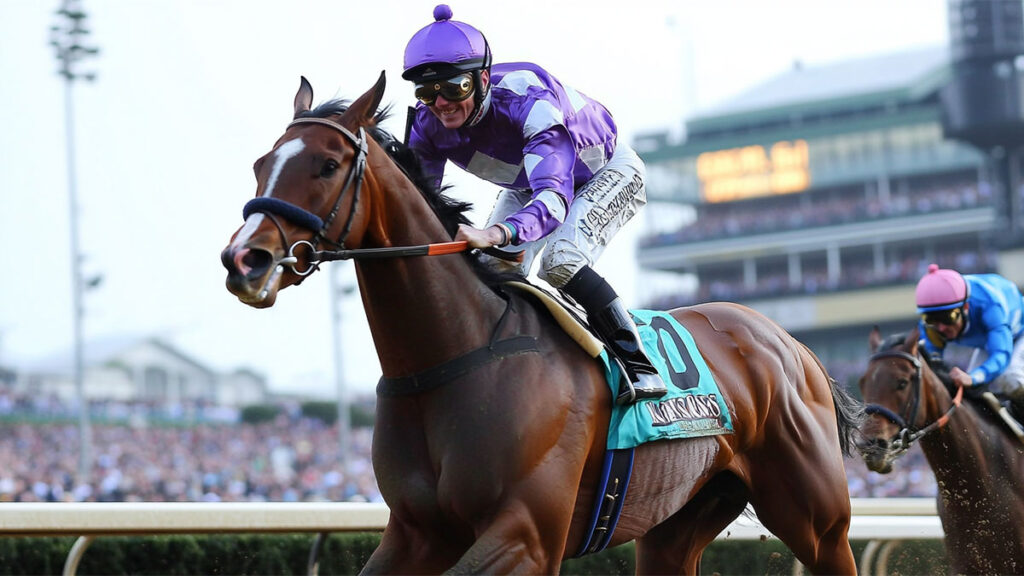
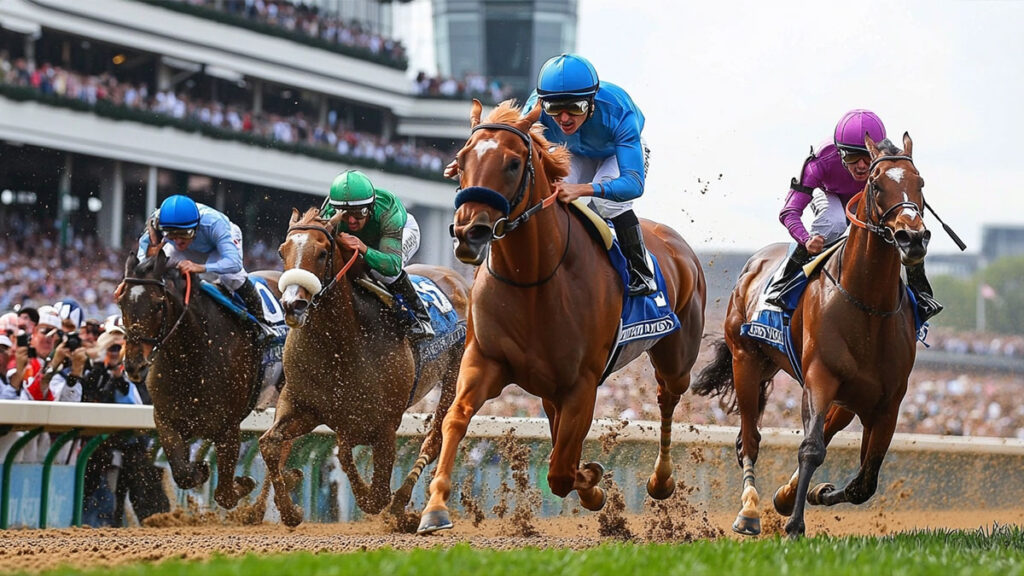
Every afternoon something remarkable happens across France. From the brasseries of Paris to the smallest villages in Brittany, thousands of people stop what they’re doing for a few minutes. Televisions in bars switch to Equidia, phones light up with live streams, and an entire nation holds its breath for roughly two minutes while 16 to 20 thoroughbreds thunder toward the finishing post. This daily ritual has a name: the Quinté+.
What Exactly Is the Quinté+?
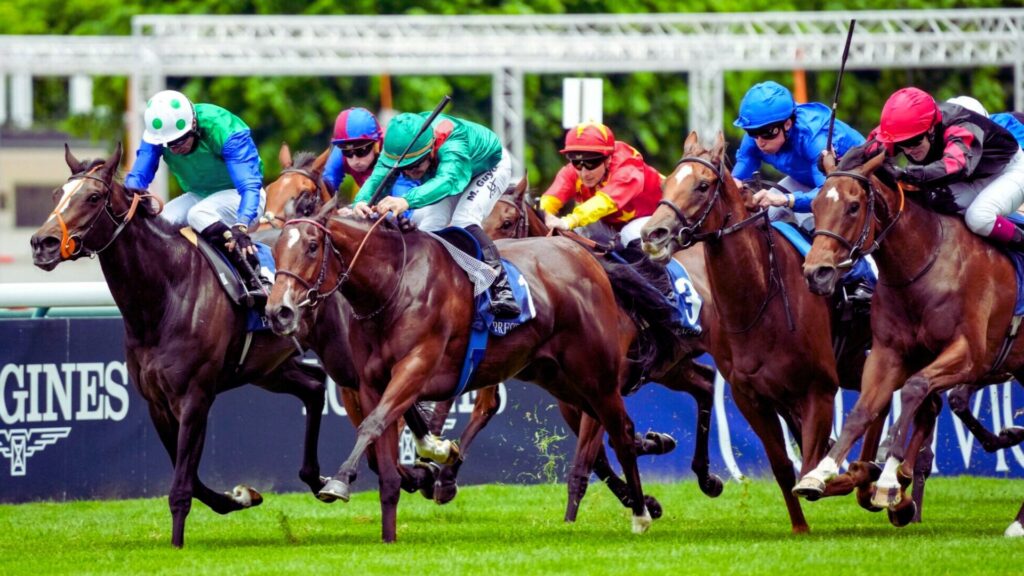
Launched on October 23, 1989, by the PMU (Pari Mutuel Urbain), the Quinté+ is not just a horse race — it is the flagship event of every French racing day. The concept is beautifully simple yet endlessly fascinating: in a single selected race (usually a high-quality handicap with a large field), spectators and enthusiasts are invited to find the first five horses home in the exact order.
- Race distance: usually between 2,000 and 4,000 metres
- Type: flat or trotting (harness racing), alternating throughout the week
- Venues: the biggest tracks in France — Longchamp, Chantilly, Deauville, Vincennes, Auteuil, Cagnes-sur-Mer, and many more
- Prize money for the race itself: often €50,000–€100,000, attracting the best horses and jockeys in the country
Because the Quinté+ is always a handicap (weights are adjusted to theoretically equalise chances), the races are ultra-competitive and produce dramatic finishes almost every day.
Why the Quinté+ Became a Cultural Institution
In a country that loves sport, food, and ritual in equal measure, the Quinté+ found the perfect recipe:
- It happens every single day (except Christmas Day and a few exceptional dates)
- It is broadcast live and free-to-air on Equidia and LCI
- The same race is run at the same time every afternoon, creating a national moment of communion
- The difficulty of finding the exact top-5 order makes it an intellectual challenge as much as a sporting spectacle
Over three decades, the Quinté+ has woven itself into everyday French life. Grandfathers introduce grandsons to the sport through the Quinté+. Office pools form around it. Radio stations interrupt programming for the last 500 metres. Entire websites and newspapers dedicate columns to dissecting the previous day’s result and preparing for tomorrow’s puzzle.
How the Race Is Chosen and Structured
Each morning, the PMU and France Galop/Letrot select one race from the day’s program to be crowned the “Quinté+ du jour”. The criteria are strict: large field (ideally 16–20 runners), competitive weights, and a track in good condition. Once chosen, the race receives massive media coverage. Specialist journalists, trainers, and former jockeys spend the morning analysing form, ground conditions, draw bias, and jockey bookings.
The traditional weekly rhythm that fans know by heart:
- Monday & Friday – Vincennes (trot attelé, winter) or flat racing
- Tuesday & Thursday – Chantilly or provincial tracks
- Wednesday – often Longchamp or Auteuil (jumps)
- Saturday – the premium weekend Quinté+, frequently at ParisLongchamp or Deauville
- Sunday – mixed, often trotting or major provincial meetings
The Unique Atmosphere of a Quinté+ Day
If you’ve never been to a French racecourse on Quinté+ day, imagine this: the stands are fuller than usual, the air buzzes with animated discussion, and total strangers exchange strong opinions about horse number 7’s recent form over a coffee at the bar. Track announcers build the tension from the moment the horses enter the parade ring. When they finally reach the starting stalls or line up behind the wings for a trotting start, you can feel the collective intake of breath.
Then the sprint. Two minutes of pure theatre. Cheers erupt for popular horses, groans for fallen favourites. And when the judge posts the official order — “4-8-12-3-16 arrivée” — an explosion of joy or despair ripples through the crowd.
Famous Quinté+ Moments That Entered Legend
- 14 February 1994: the biggest ever outsider combination when the first five home paid over 150,000 times the unit stake
- Al Capone II’s four consecutive Quinté+ victories in 2011 — still the modern record
- The snow-affected Vincennes Quinté+ of December 2010 when visibility was almost zero yet the race went ahead
- Cirrus des Aigles, future multiple Group 1 winner, finishing second in a Quinté+ early in his career, proving the quality lurking in these handicaps
Where to Follow and Study the Quinté+
For anyone wanting to dive deeper into tomorrow’s Quinté+, the most respected daily resources remain:
- Equidia Live (free television and app)
- Paris-Turf and Tiercé Magazine (the historic newspapers)
- Specialised websites offering detailed PronosticQuinté with form analysis, expected pace maps, and jockey-trainer statistics
Many enthusiasts complement horse racing study with other sports during the evening. Those same analytical skills — spotting value, understanding form cycles, and reading pace scenarios — translate surprisingly well when researching must win tips in football accumulators or other disciplines.
More Than a Race — A Daily Celebration of the Horse
At its core, the Quinté+ is a celebration of everything France loves about horse racing: the beauty of the thoroughbred and the trotter, the skill of trainers and drivers, the courage of jockeys, and the eternal riddle of trying to solve an almost unsolvable puzzle.
Whether you’re trackside at Vincennes on a freezing January evening or watching on a tablet in a café in Marseille on a sunny August afternoon, the Quinté+ delivers the same magic: five horses cross the line in perfect order, and for one brief moment an entire country shares the same heartbeat.
That is why, more than 35 years after its creation, the Quinté+ remains not just a race, but the very heart of French turf culture.